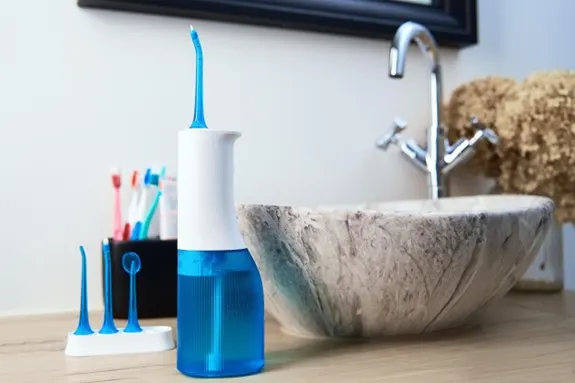
Water flossers, also known as oral irrigators or “water floss,” have become a very popular addition to at-home oral hygiene. Many patients look for an easier way to keep their teeth and gums clean, especially when wearing braces or having fixed dental work. Still, people often wonder whether they truly need this device, in which situations it works best, and whether it can replace traditional flossing or brushing. This article provides a clear, practical explanation aimed at helping patients make informed decisions based on real clinical experience.
What Is a Water Flosser?
A water flosser is an electric device that directs a thin stream of water into the spaces between the teeth and along the gumline. The water stream can be either pulsed or continuous, allowing effective rinsing of food debris from areas that a regular toothbrush cannot reach. Unlike conventional brushing, the water jet easily enters tight interdental spaces, areas under dental bridges, and around orthodontic brackets. It helps reduce irritation, improves blood flow in the gums, and provides a noticeable feeling of freshness. Although very helpful, it’s important to understand that a water flosser cannot remove firmly attached plaque, so it should be used only as a complement — not a replacement — for brushing and flossing.
When Is a Water Flosser Especially Useful?
A water flosser is not equally necessary for every patient, but in certain situations it provides significant benefits. In these cases, dentists often recommend regular use because it makes daily cleaning easier and helps maintain healthier gums.
1. For Patients Wearing Fixed Braces
Anyone who has worn braces knows how difficult it can be to keep the teeth completely clean. Brackets, wires, and elastics create many small areas where food easily gets trapped. If not removed, this buildup can lead to plaque accumulation and white spot lesions around the brackets, caused by enamel demineralization.
A water flosser makes it easier to rinse those hard-to-reach spots. While it cannot remove plaque that is already firmly attached, it significantly reduces the risk of new buildup. That’s why orthodontic patients are often advised to combine brushing, interdental brushes, and a water flosser for the best results.
2. For Patients With Bridges and Implants
Patients with dental bridges or implants require extra care when it comes to hygiene. Bridges have hidden areas underneath them, and implants depend heavily on the health of the surrounding gum tissue. A water flosser is especially effective for flushing out food debris beneath a bridge—an area regular floss often cannot reach—and for keeping the tissue around implants clean.
Consistent use helps reduce plaque buildup and supports healthy gums, lowering the risk of peri-implant inflammation, which can threaten implant stability.
3. For Inflamed or Sensitive Gums
When the gums are tender, swollen, or prone to bleeding, brushing and flossing can feel uncomfortable. A water flosser allows for gentler cleaning because the water stream lightly massages the gums and helps reduce swelling. Many patients report that using a water flosser makes it easier to maintain hygiene during periods of gum sensitivity.
However, if bleeding continues for more than seven to ten days, it may indicate underlying inflammation that requires professional dental evaluation.
4. For Patients With Partial Dentures
People who wear partial dentures often struggle to clean underneath metal clasps and base components that sit close to the teeth and gums. A water flosser can effectively rinse these areas and remove trapped food, improving hygiene and reducing the risk of irritation and inflammation.
When Is a Water Flosser Not Enough?
Although helpful and convenient, a water flosser has limitations that patients should understand to set realistic expectations.
It does not remove firmly attached plaque - Only proper brushing with an appropriate toothbrush can remove plaque that is securely adhered to the tooth surface.
It does not replace dental floss - Floss makes direct contact with both tooth surfaces between two teeth, something a water stream simply cannot do.
It does not remove tartar (calculus) - Tartar can only be removed by a dentist using professional ultrasonic or manual instruments.
It does not treat gum disease - A water flosser may reduce symptoms such as swelling or bleeding, but it cannot replace periodontal treatment, deep cleaning, or any other professional therapy.
So – Yes or No?
A water flosser is an extremely helpful addition to daily oral hygiene, especially for patients with braces, implants, bridges, sensitive gums, or dentures. It improves cleanliness in hard-to-reach areas, but it cannot replace essential tools such as a toothbrush and dental floss. The best results are achieved when it is used alongside regular brushing and interdental cleaning.
Conclusion
A water flosser is a practical and effective tool that can significantly improve oral hygiene, particularly in situations where traditional methods struggle to reach all areas. However, it is not a substitute for basic oral hygiene practices. It works best when combined with proper brushing, flossing or interdental brushes, and regular dental check-ups.